


As our van approached the parking lot, I only vaguely noticed a woman crossing the highway, carrying something in her arms. In a non-rare moment of thinking about myself, I was mostly thinking about how I wasn’t excited about wandering around in the freezing rain. Staying warm in the van sounded infinitely more thrilling than visiting and learning about Ananuri, a 16th-century fortress apparently on a UNESCO “tentative list.”
An early-30s Aussie woman who’d been traveling the world solo for several months seemed to feel the same way. However, we had to leave our warmth cocoon if we wanted to make the most of our tour. And if we wanted to make memories of life. We did, so all six of us bundled up and piled out of the van.
That first step out of comfort is the hardest. It’s like anything, though. Almost the instant once you start, you find that you really can get into the spirit of the thing.
Our guide, Dmitri, gave us a short break to take photos of the view, smoke, get coffee at the one c, and visiting the WC.
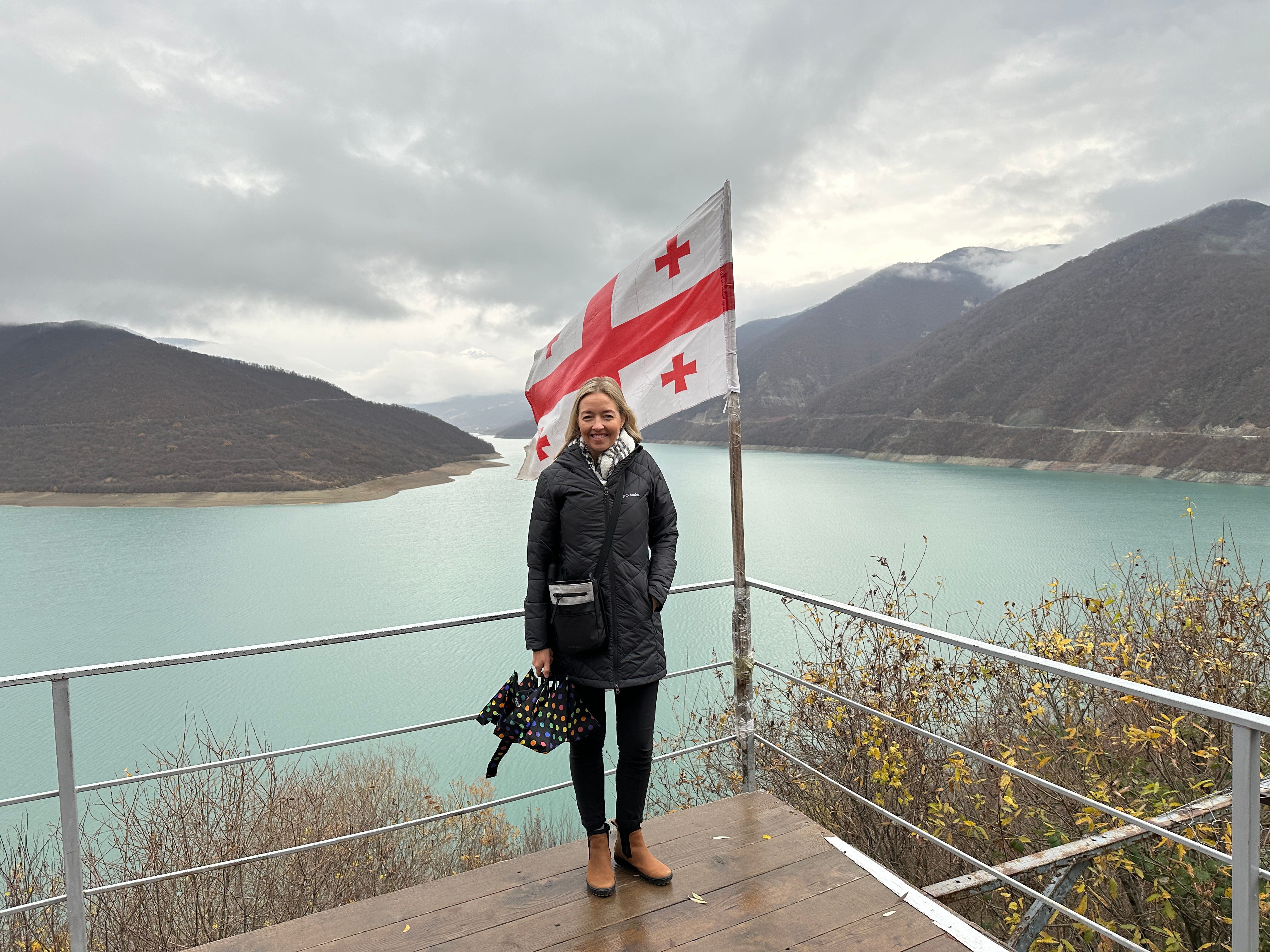
The WC has six reviews on Google, with a total rating of 4.3. Not bad. According to one of the reviews, it “smells like lilies of the valley.” Can’t say I agree. The cost of admission to this bare- bones facility was 1 lari, or approximately $0.37 USD.
It was the first squat toilet I’d come across in decades. For the tiniest second, I wondered how I was supposed to SIT on this, erm, “toilet.” This was quickly replaced by a correct understanding that I needed to squat, but which way to face? I chose to face the door. With no heating in the primitive building, it was COLD in what felt like a jail cell; bars on the open window really contributed to that vibe.
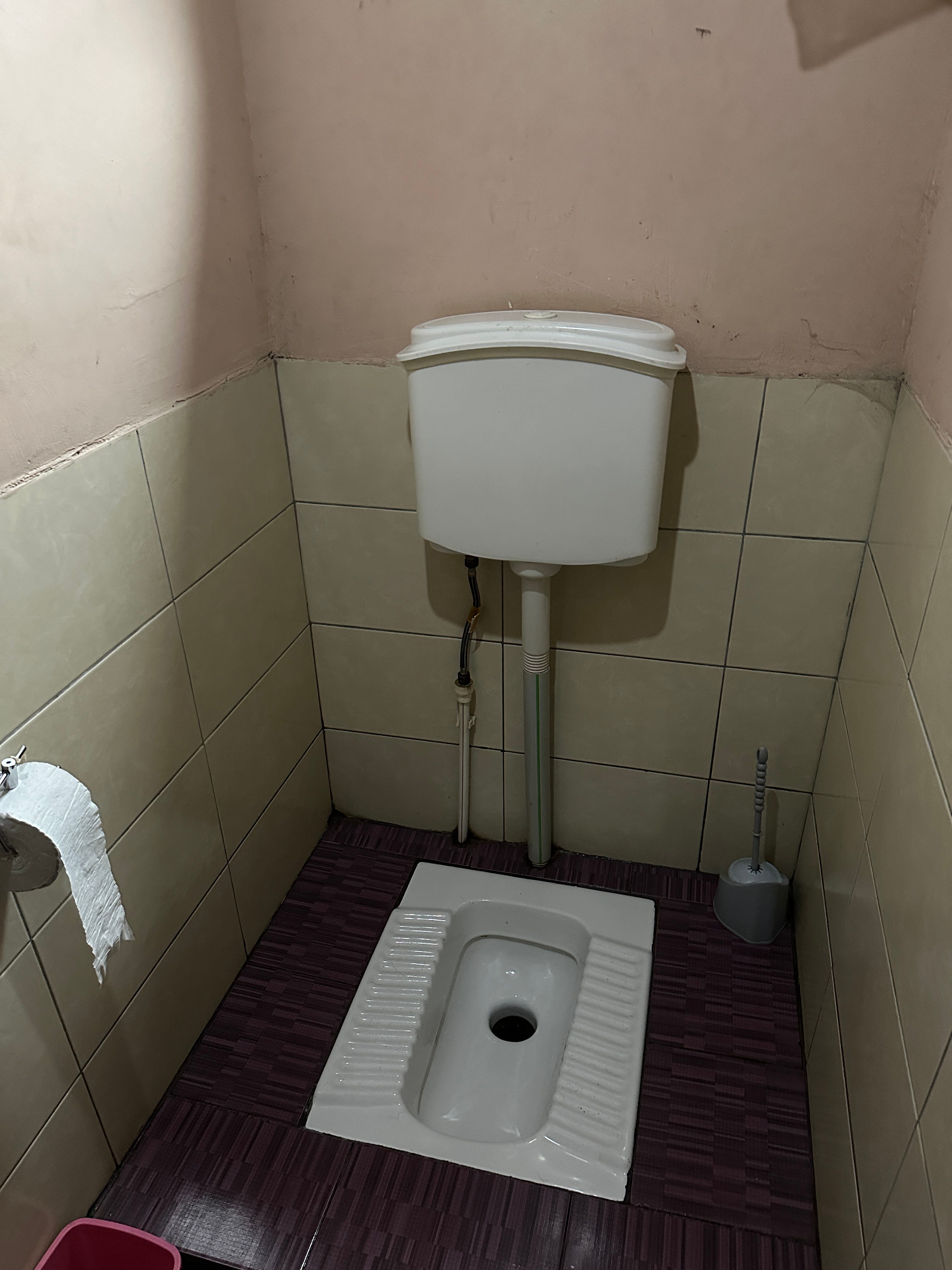
It was only upon leaving the WC that I realized what the highway woman was doing: foraging wood for her potbelly stove—her only source of heat. Suddenly, I felt spoiled for all my warm clothes and the warm van I would be returning to.
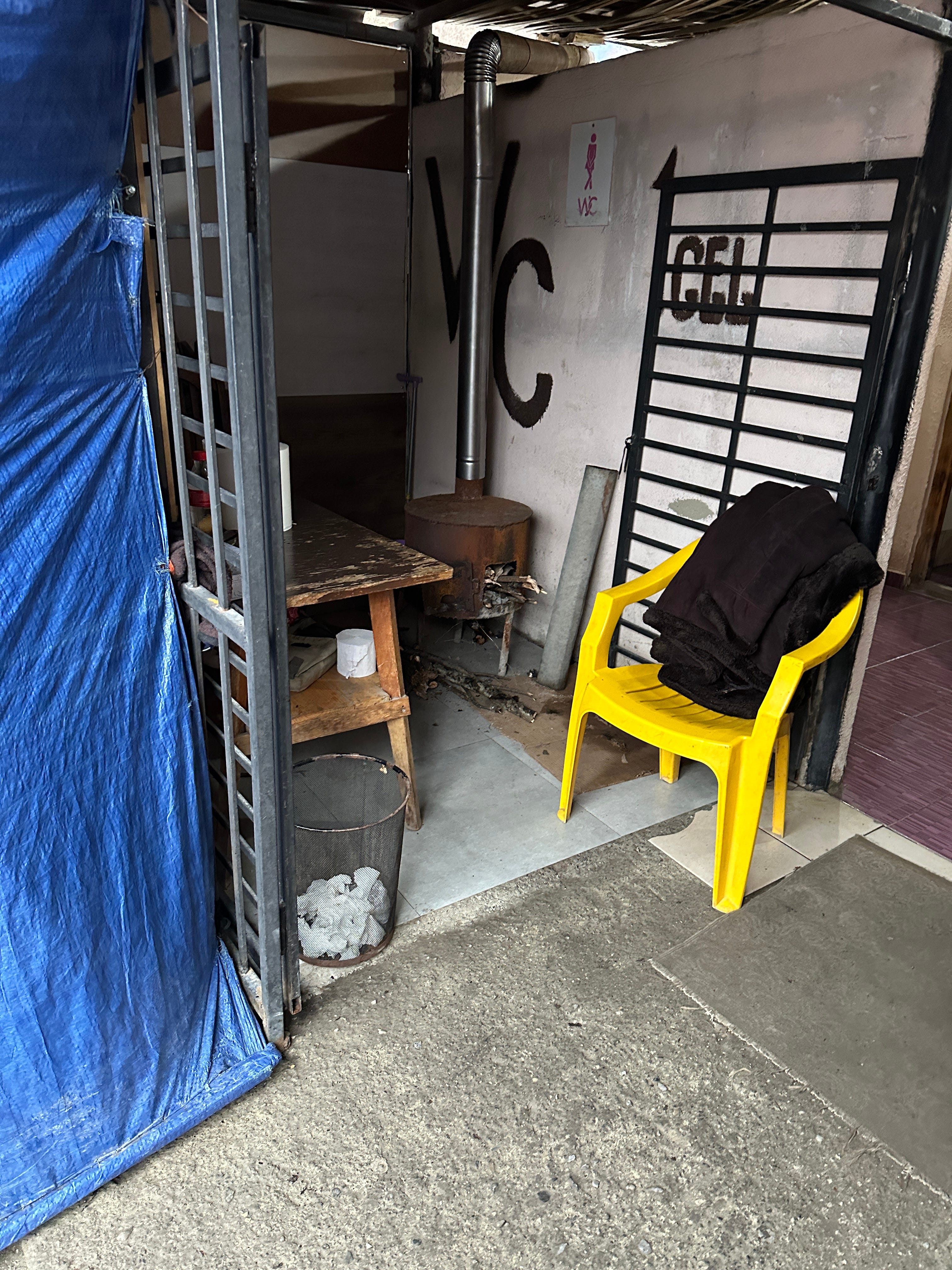
As I’d come to expect, there were lots of free-range dogs on the premises.
Up to this point in my travels, Rome and Athens were the only places where I’d seen wild domestic animals so abundant. Cats, in particular. In Rome, felines seemed to occupy the ruins by night. In Athens, they occupied the ruins and more anytime they darn well pleased. In a future post, I’ll introduce you to the philosophical cats occupying the Ancient Agorra in Athens.
As I got out and about my first day in Tbilisi, Georgia, I was surprised by the variety of dogs, though. Apparently ownerless, they putter around, nap wherever they feel like it, or just sit, observing the happenings of life. Some organization or perhaps the government vaccinates and tags these stray dogs and lets them loose to fend for themselves. Apparently, these dogs establish loose residency near stores and restaurants, returning “home” for sleep and food provided by store owners and nice people.
These Georgian dogs are patient, non-aggressive toward everyone and everything except cars, and EVERYWHERE. The only thing making them a nuisance is that they don’t pick up after themselves. Usually, looking up while walking is preferable in a new place—something about keeping your wits about you—but not here.
Back to the Ananuri Fortress and their resident dogs.
Exhibit A:
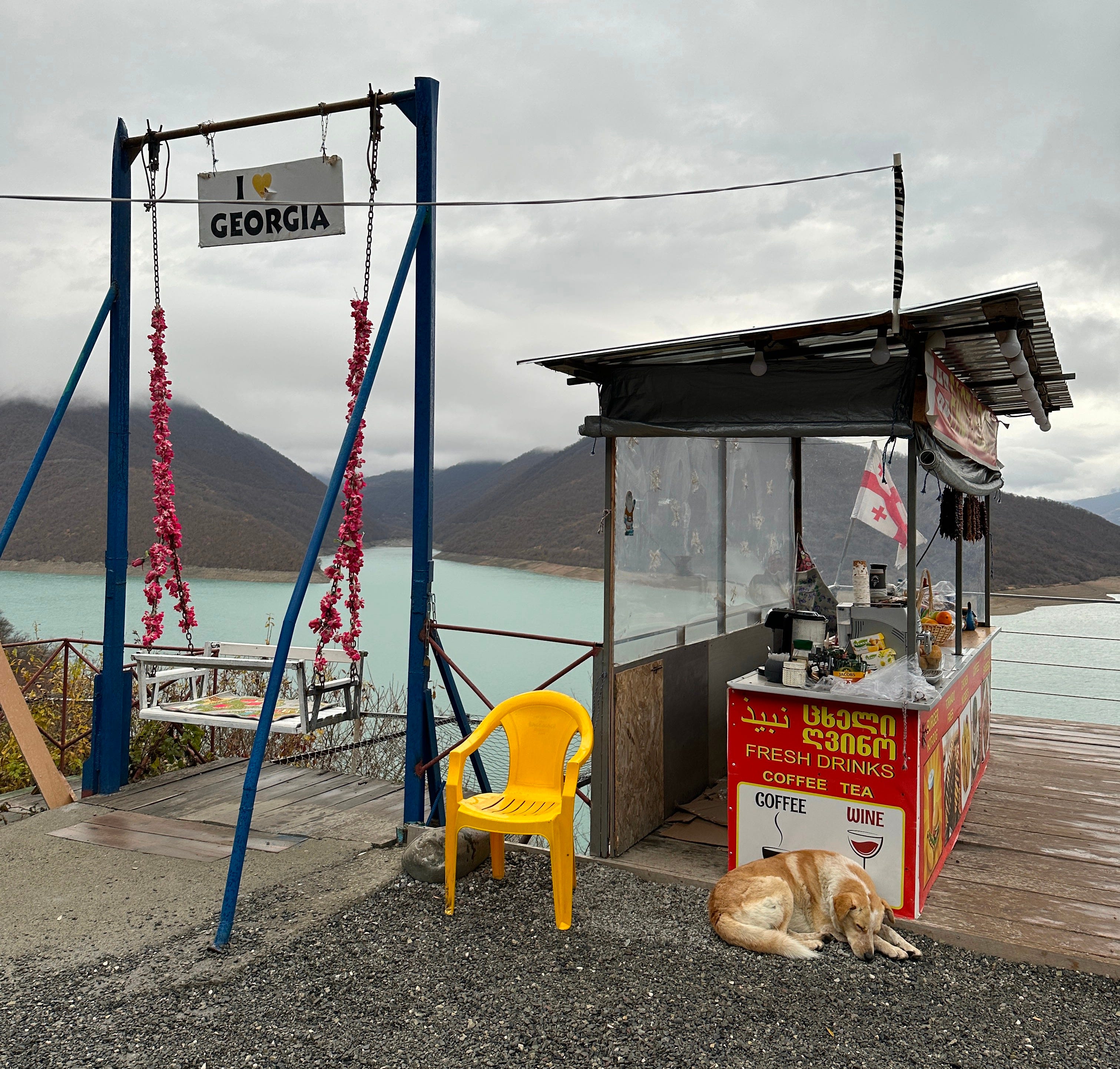
Exhibit B:
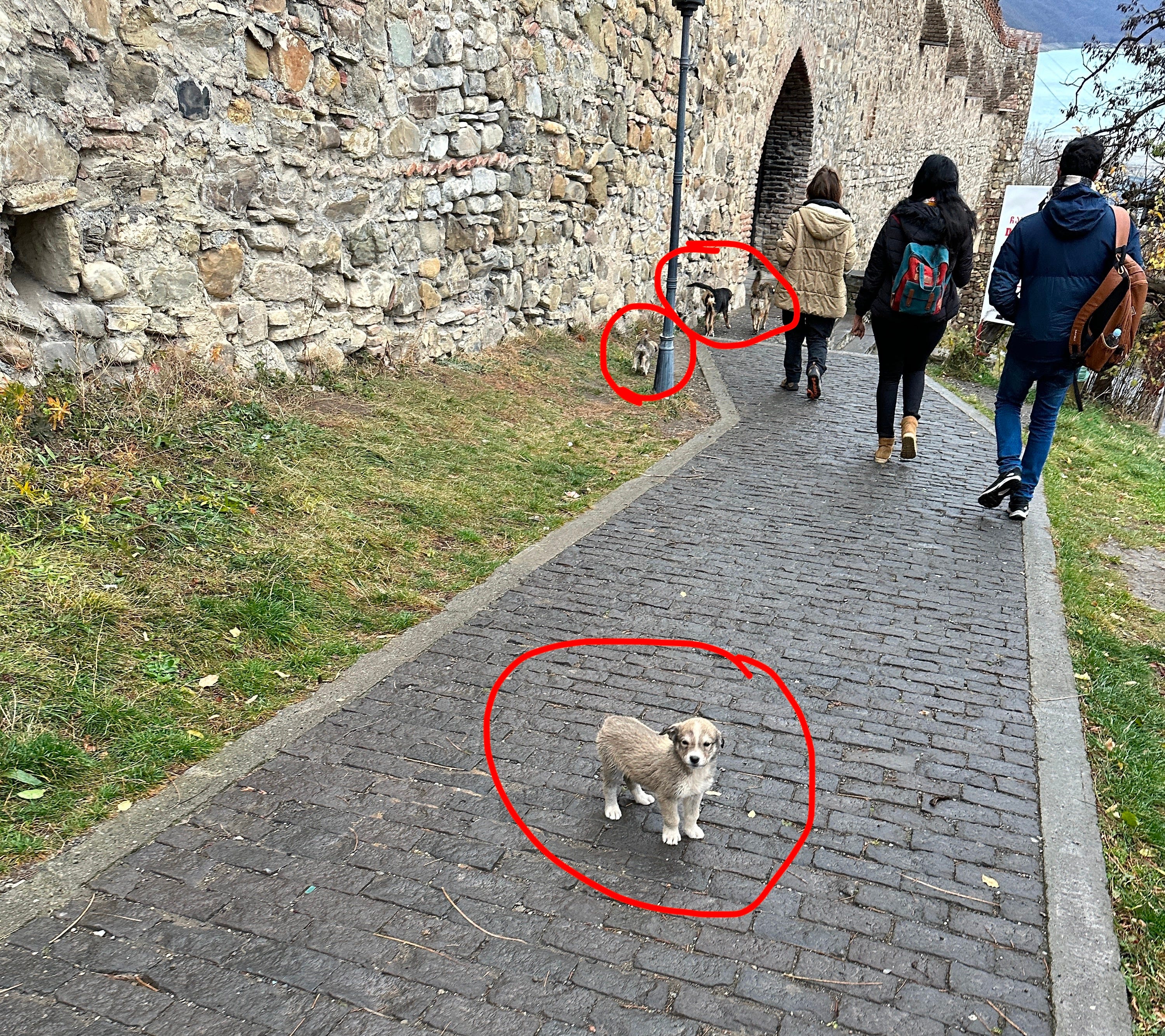
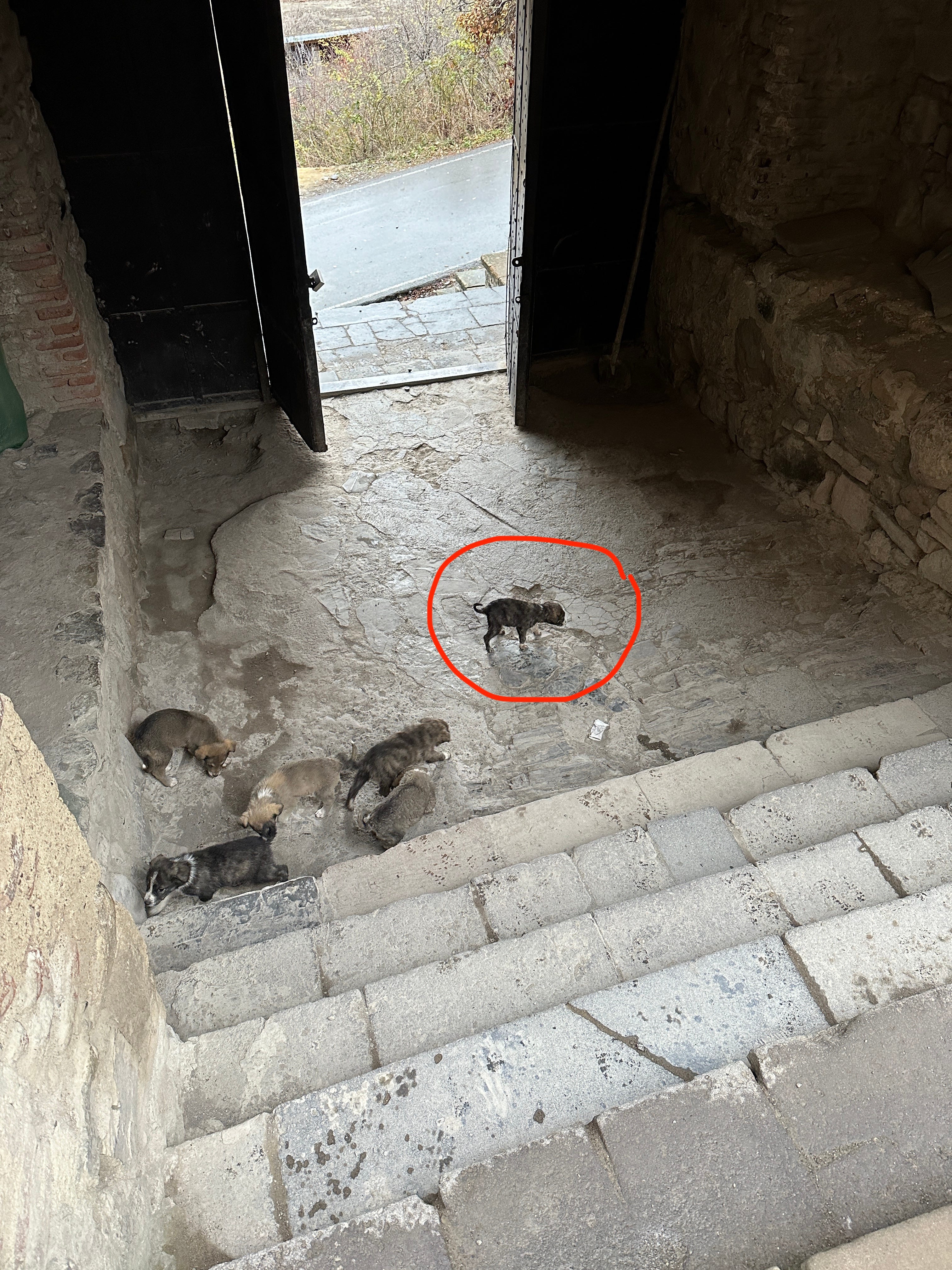
Exhibit C:
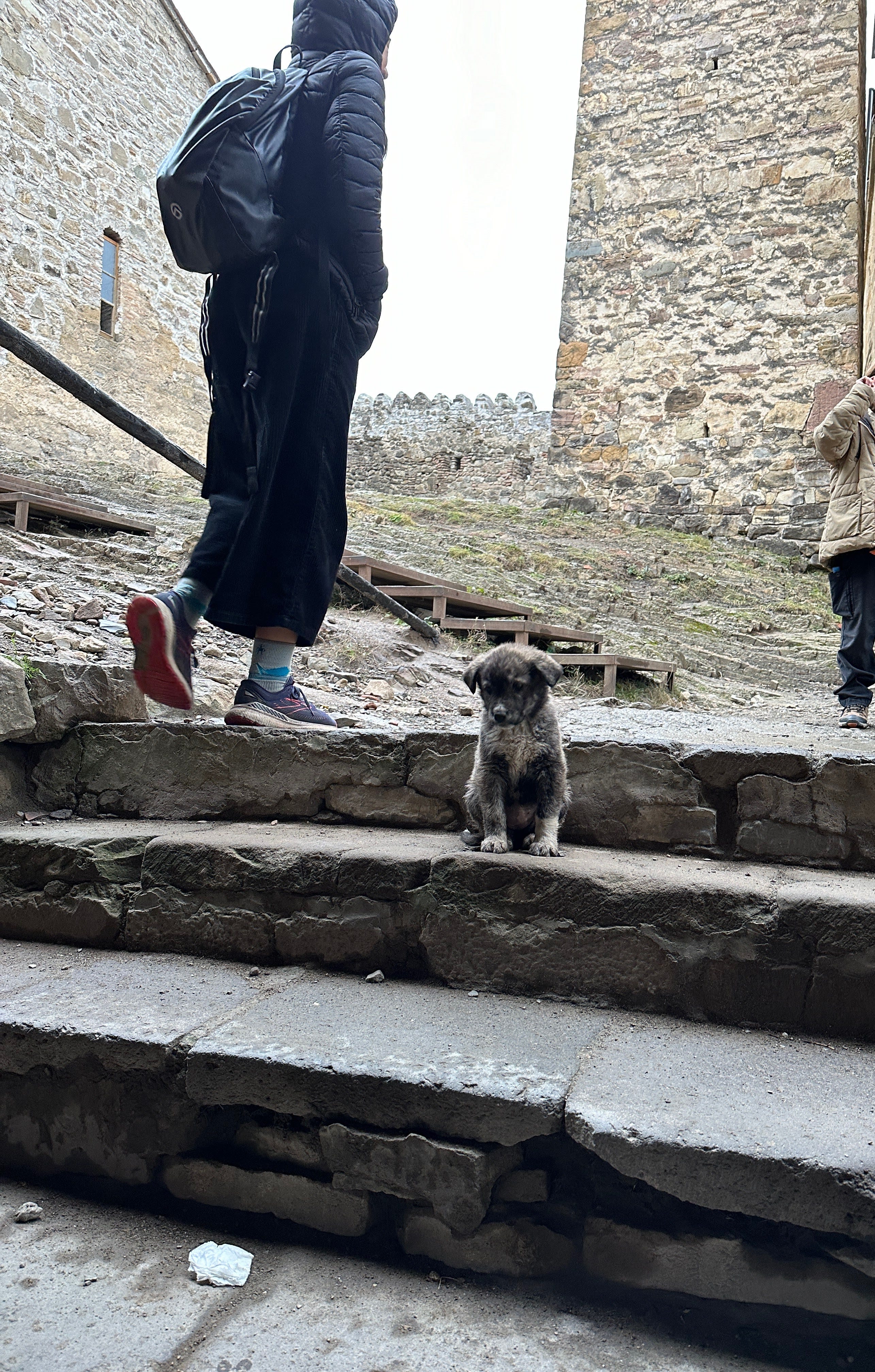
The puppies in preceding exhibits were just some of a passel of adorably rambunctious canines. They were doing what puppies do best: tumbling over each other, exploring, wrestling. Let’s not judge them too hard for being totally unappreciative of the significance of the castle complex they occupied.
Our tour guide began gathering our group just inside the entrance to begin sharing HISTORICAL INFORMATION. Be still, my pounding heart. I adore history. But my attention and pounding heart were tugged away by Tiny Tim, the sickly sibling of the healthy puppies.
While his siblings congregated in the fortress entryway, this pitiable creature sat, crying helplessly, in a puddle in the open. Obviously the runt of the litter, he was like the canine version of the nameless match girl from The Little Match Girl. Or Tiny Tim from A Christmas Carol, hence the name.
I scooped this muddy bundle of ill-fated life out of the puddle and held him. Cupping his shivering body in my gloved hands, I held Tiny Tim to my chest trying to pour warmth and love into him. I’m no saint, though; even the hardest heart would’ve been stirred to help this poor creature.
Realizing after a couple minutes that this wasn’t exactly a sustainable situation—it was unlikely my tour guide or my hotel would be supportive of me adopting a puppy—I placed him in the fortress entryway with his siblings. There he remained for exactly as long as they chose to stay, which was not long. When they scampered off to explore, little Tim struggled after them.
As sick and cold as he was, he couldn’t be convinced to stay where it was good for him. No matter where I or others placed him during our time in the complex—the cozy shed where other of his siblings lounged, the entryway again—Tiny Tim found his way back into the miserable cold, reinforcing my sad conclusion that he probably wasn’t long for this world.
I did eventually learn some history that day. Not much, but some. I think this was the first place I was introduced to the fact that invading Russians desecrated the faces of Christian figures on the church wall frescos. Our guide knew a lot, and charmingly began his lectures with “Dear Guests.”
It could be that I just don’t have the steel-trapped brain of my best friend who can remember ALL the things she reads or learns. Or that I’m wired to remember other stuff: faces, names, details, and any experience that made me laugh or feel something human. However mundane these Ananuri recollections may appear, they highlight a couple things for me:
We are wired to care about the suffering of other people and creatures, and do something about it.
We’ve got to leave the literal or figurative warm van if we want to make any memories of life.
And finally, life really is made up of the small stuff.
The older woman warming herself with wet wood from across the highway. The cropped pants and tiredness of our Aussie fellow traveler. The somber nun mopping the church at Ananuri. Dmitri’s endearing phraseology. The crying puppy I remember more than all of the well dogs put together.
It’s the details of life, and the small things that make us feel something wonderfully human, that make life so rich and memorable.
Isn’t life cool and aren’t people interesting? See you in the next one…

Thanks for reading! If you enjoyed this, please like it ♡ or drop a comment. They help—and are appreciated—more than you know. If you’re not subscribed already, you know what to do with the button below...